Sound and the City: The Reality of Urban Events
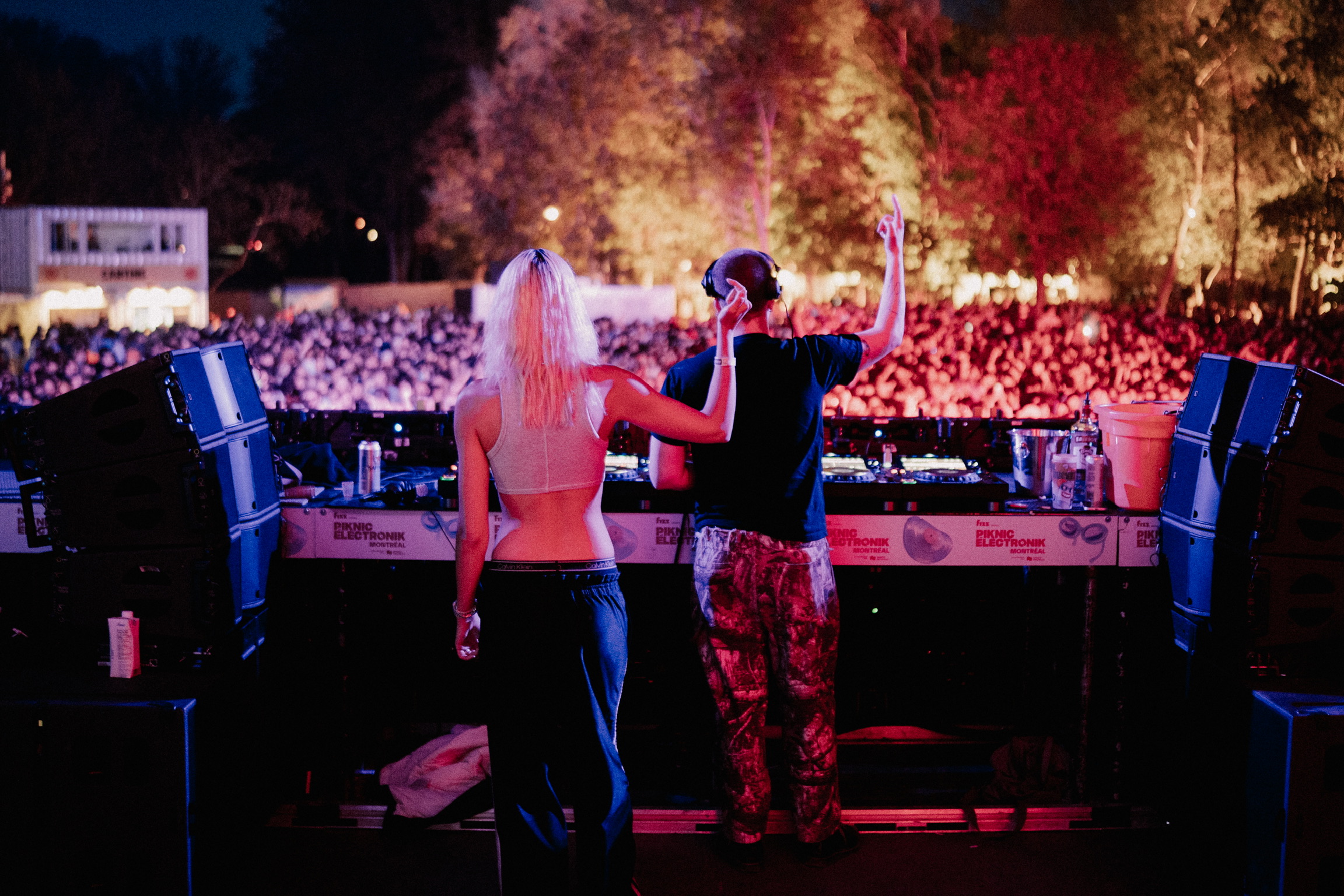
Image credits: Heatmaps: L-Acoustics | Festival photos: Multicolore
Hosting a festival or an outdoors concert in a city is like juggling invisible waves. On one side, festivalgoers want to feel the music in every beat, fully immersed in the experience. On the other hand, neighbours expect to maintain their daily lives without disruption. Citizens voice concerns, municipalities set limits, and organizers want to deliver unforgettable experiences, all while staying within the boundaries of acceptability.
Solotech understands that the solution isn’t simply turning the volume down. Volume isn’t just a measurement: it determines the experience for the event attendees, but it can also create disturbances for those in the surrounding areas. Our approach is to anticipate, plan, and optimize rather than react after complaints arise.
How Sound Moves Through the City
Imagine this: it’s festival season, and the city is alive with music. People are dancing, laughing, immersed in the festival experience. Meanwhile, a few blocks away, a neighbor notices a strange vibration on the table, their glass rattling ever so slightly, the bass echoing through the walls. Over time, those subtle, persistent disturbances can become deeply frustrating. This is the invisible challenge of hosting large-scale outdoor events in urban environments: it’s not always about the music being “too loud,” it’s about sound traveling in unexpected ways, creating annoyance in subtle, sometimes imperceptible ways.
Every outdoor show is different. The environment changes, the audience moves, and the sound interacts with the cityscape in unpredictable ways. This is why every outdoor event begins with a simple question: how do we give the audience an immersive experience while minimizing the impact on surrounding communities?
Calibrating the Right Frequency
To meet this challenge, Solotech combines technical innovation with deep experience in the field. A key part of the solution is Solotech’s ongoing collaboration with manufacturers like L-Acoustics. By working directly with their engineers, Solotech ensures that each configuration is calibrated based on concrete event data and by collecting measurements during the event that allow settings to be adjusted and modified in real time.
Patrice Lavoie, Senior System Designer at Solotech, explains this important collaboration: “It’s not a simple supplier relationship. It’s a partnership. We combine the client’s vision, our field expertise, and L-Acoustics’ innovation to help move the client forward with new tools and technologies”.
One example is the use of L-Acoustics L2 cardioid line arrays, a technology engineered to focus sound energy on the audience and significantly reduce spill to the sides and rear. This is achieved through L-Acoustics’ proprietary cardioid bass arrangement, which combines forward-facing and rear-facing speaker components with precise signal processing to achieve destructive interference behind the system — effectively suppressing low-frequency energy that would otherwise radiate backstage or into acoustically sensitive areas. The result is tighter, more controlled sound reinforcement that keeps energy where it belongs: with the audience.
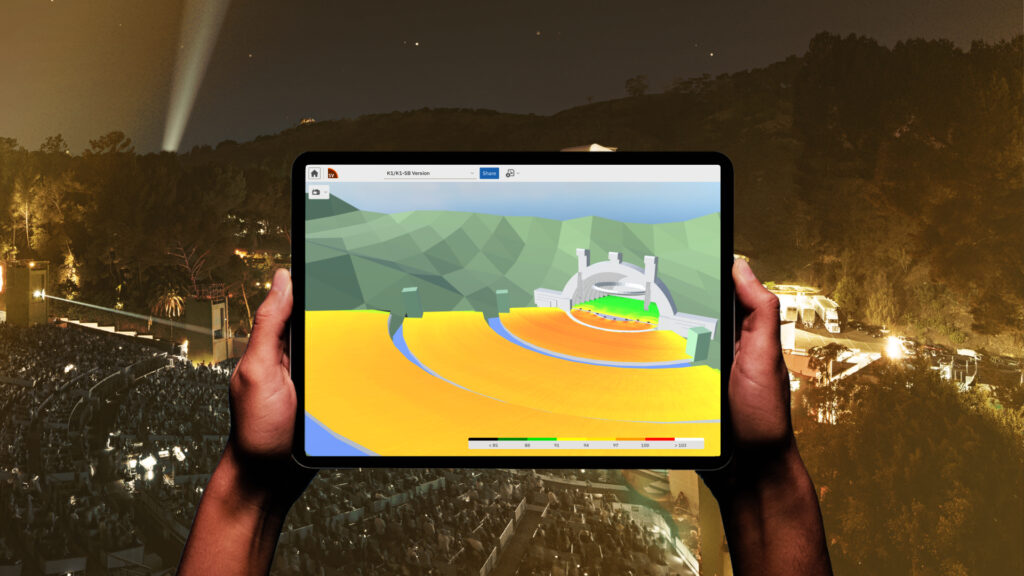
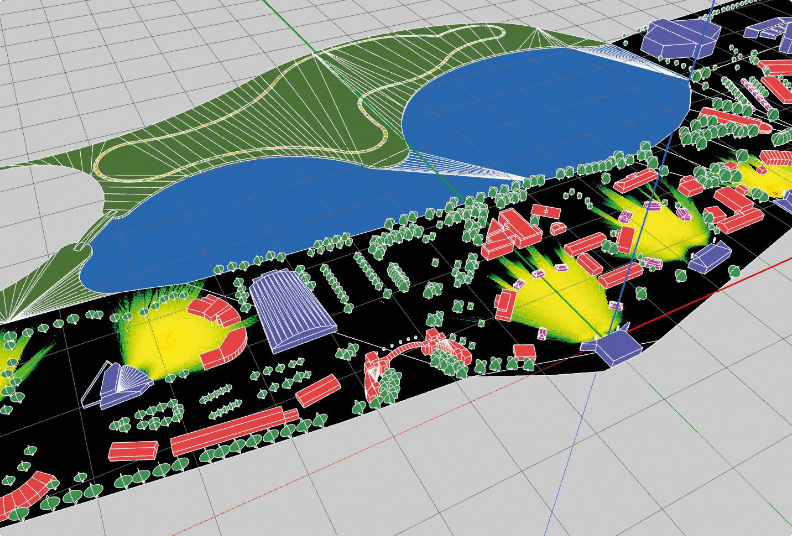
Solotech also relies on advanced modelling tools such as Soundvision, which allows engineers to simulate and design system configurations within specific environments. More recently, the introduction of the SDE standard makes it possible to export system designs from Soundvision into environmental noise management software like SoundPLAN, enabling accurate, comparable noise predictions across multiple stages and sound configurations, a critical capability as outdoor events increasingly navigate noise requirements in urban settings. Solotech’s certified consultants can work with SDE directly, and L-Acoustics also offers its Environmental System Design service to support projects where additional noise prediction expertise is needed.
With this approach, elements such as buildings, containers, and other obstacles are integrated into the calculations, generating a virtual map of how music will travel across the site and into the surrounding environment over longer distances. This allows the team to refine speaker placement, angles, and calibration before a single system is installed, creating an optimized soundscape that protects neighbouring communities while preserving the energy of the event.
“Tools like Soundvision and Soundplan are only as powerful as the expertise behind them. What makes a partner like Solotech exceptional is that they’ve invested in mastering these workflows end to end — from system design to environmental prediction — to a level where they can deliver that assurance independently. When a qualified team walks into a conversation with local authorities, they’re not presenting estimates; they’re presenting evidence. That’s what builds trust with communities, and that’s what makes events like these possible.”
— Yann Gaël Gicquel, Director of Product Management, Spatial Systems, L-Acoustics
Igloofest and Piknic Électronik: Designing Sound for the Crowd and the City
When Multicolore turns to Solotech, the goal isn’t simply to provide sound reinforcement for an event. It’s to strike the perfect balance between the energy of the crowd and the urban environment that surrounds it.
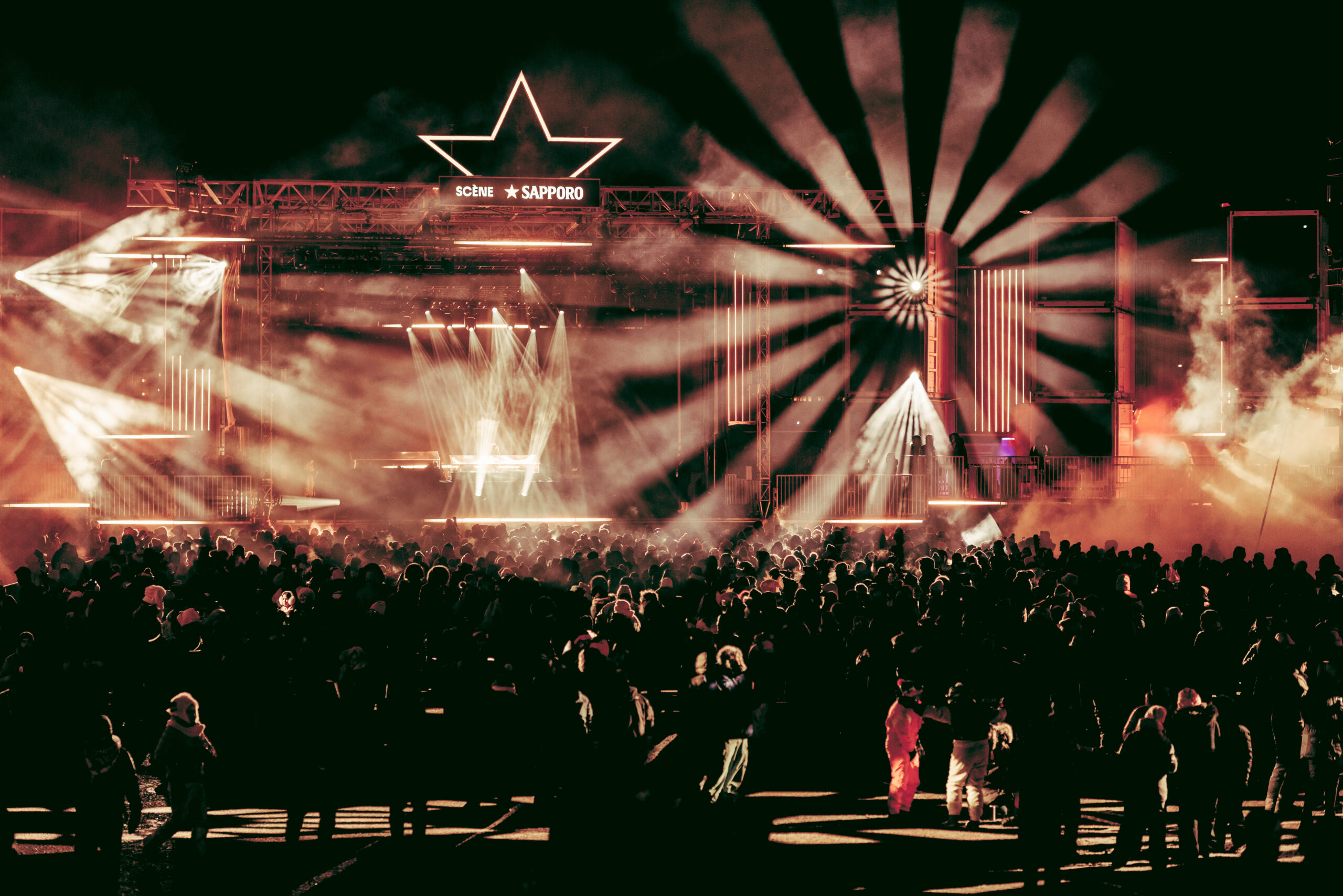
A long-standing partner, Multicolore wanted to evolve the sound systems used at Piknic Électronik and Igloofest to achieve greater control over sound coverage, refine system performance, and reduce the impact on surrounding neighbourhoods, all without compromising the intensity of the experience.
At both the Old Port and Parc Jean-Drapeau, every variable matters: wind, temperature, geography and the proximity of residential areas. By working hand in hand, Solotech and Multicolore developed a system capable of directing sound precisely where it should be experienced: at the heart of the crowd.
The result is an experience that’s just as immersive, but more precise and better controlled. Less spill, more impact.
This project also highlights the collaboration between Solotech’s Live Productions and Sales & Systems Integration teams. By combining Patrice Lavoie’s expertise in system design with Martin Berthiaume’s commercial leadership, the team supported Multicolore at every stage of the project, from the earliest planning discussions through to the implementation of the final solution.
“Solotech’s mandate wasn’t to deliver a turnkey system. Multicolore had a clear understanding of its needs and knew the direction it wanted to take. We were brought in very early to collaborate with their team. Together, we designed a custom solution tailored to the site, the audience and the city.”
— Patrice Lavoie, System Designer, Solotech
The Sound of What’s Next
Urban events aren’t getting smaller. Cities continue to grow denser; audiences expect more immersive experiences, and that comes with added responsibility towards attendees and neighbourhoods alike.
As expectations evolve, technology will continue to advance. Acoustic modelling will become more precise, directional systems will become more refined, and environmental prediction tools will integrate even more variables. What once felt experimental is quickly becoming standard practice across the industry.
As Patrice Lavoie puts it, “Controlling sound as much as possible is the new norm. These technologies are only going to evolve, and we have to evolve with them.”
Through its collaboration with manufacturers and through decades of live productions expertise, Solotech is committed to staying at the forefront of that evolution by designing sound that is smarter, not louder.
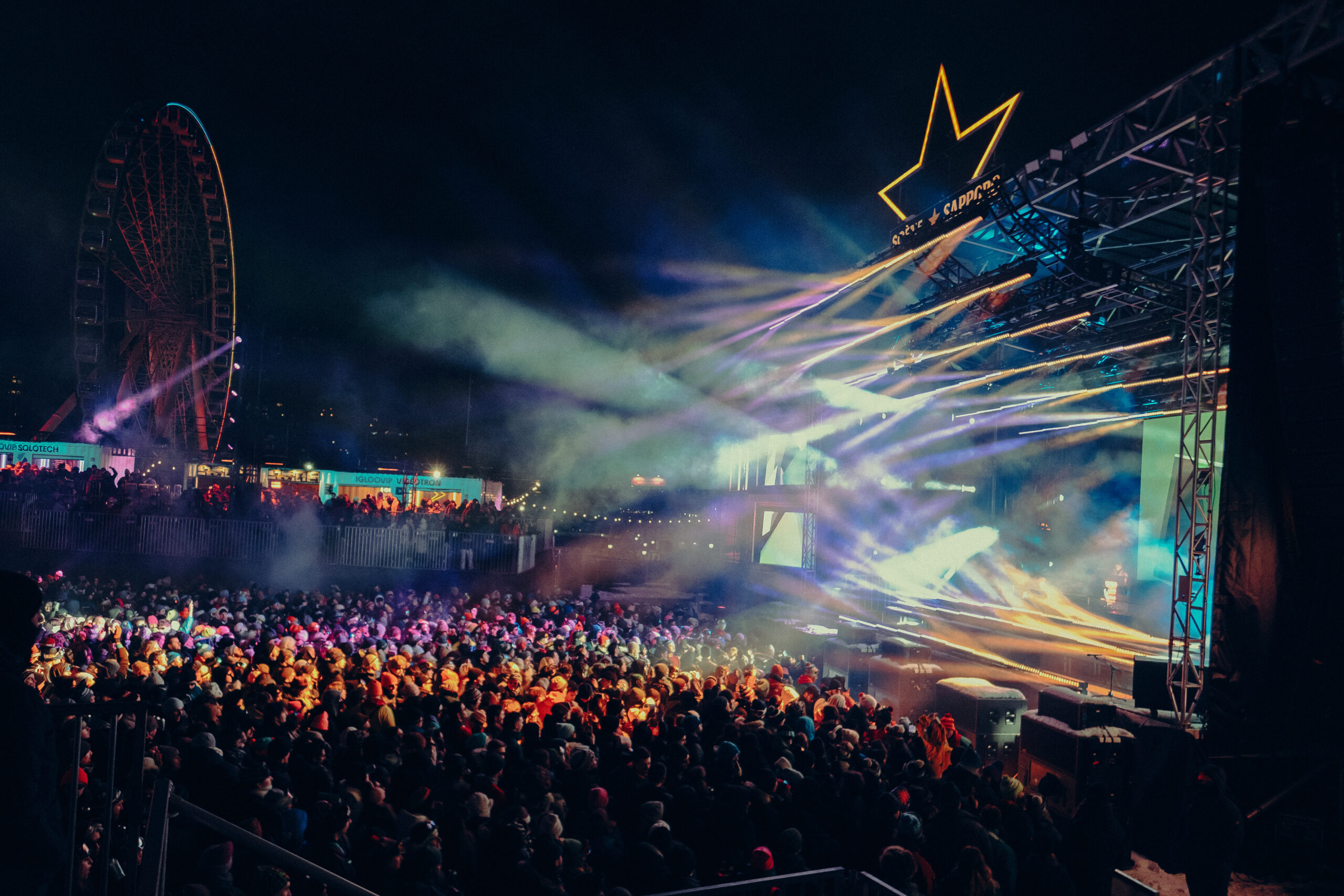
Image credits: Heatmaps: L-Acoustics | Festival photos: Multicolore